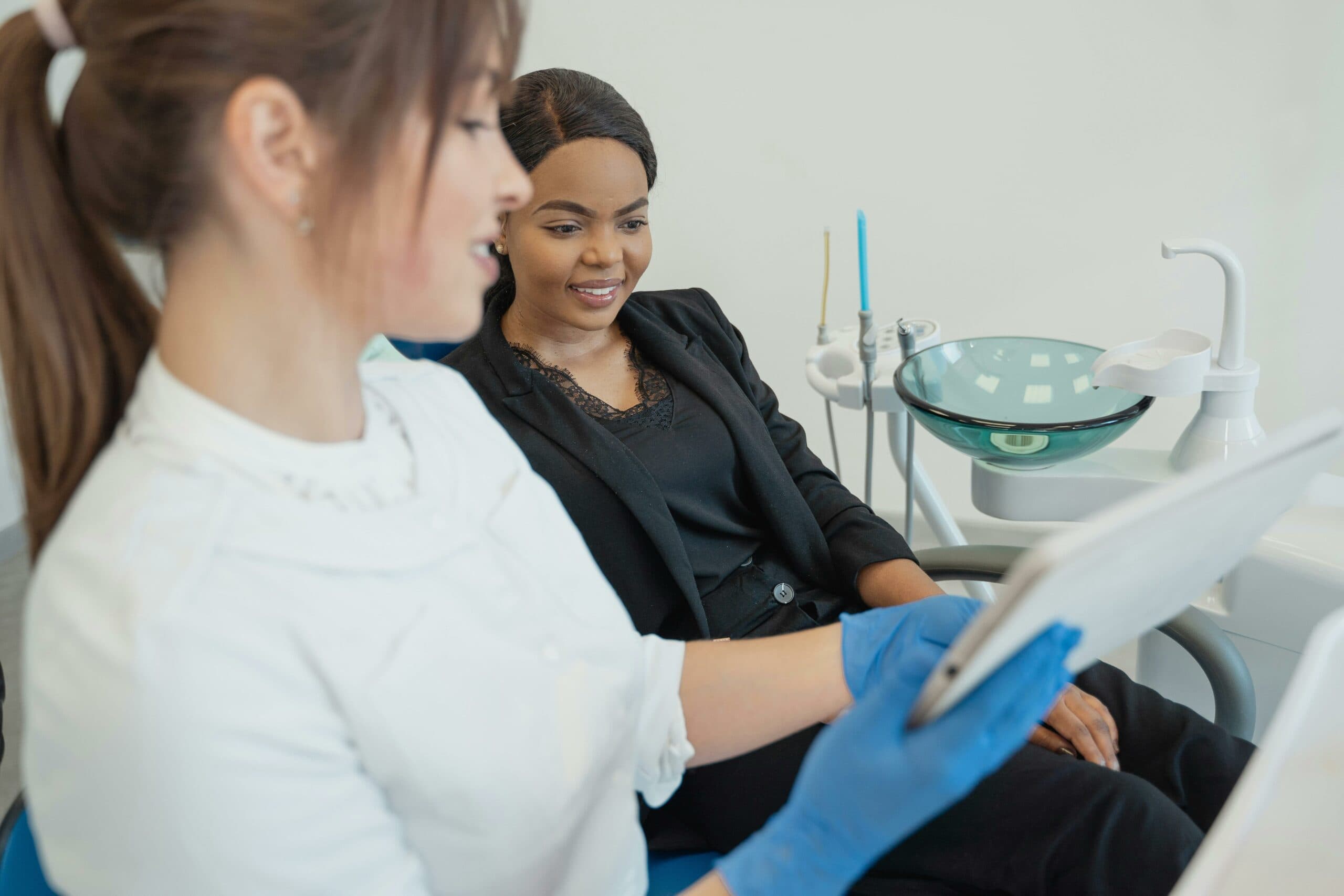
In the United States, approximately 5% of outpatients (around 12 million adults) receive incorrect diagnoses, particularly for serious medical conditions, posing risks to patient safety. Medical diagnosis plays a pivotal role in Healthcare by determining the presence or absence of diseases, guiding treatment decisions, and ultimately impacting patient outcomes.
However, the complexity and cognitive demands of interpreting medical information can lead to errors, particularly in general clinical practice and underserved areas. AI and machine learning offer the potential to transform Healthcare by providing more precise and timely diagnoses.
How AI Works in Medical Diagnosis
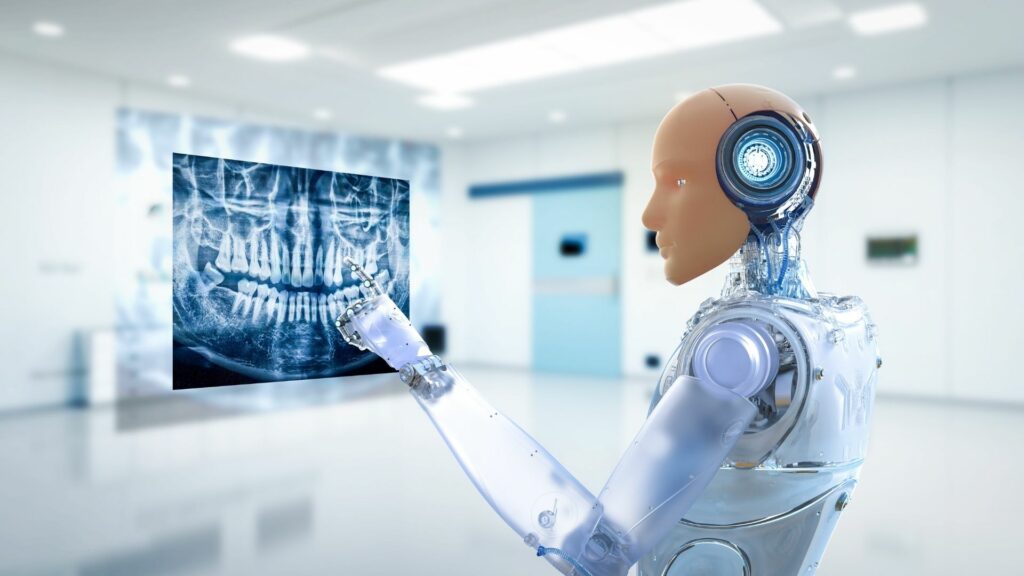
During the COVID-19 pandemic, the volume of patient messages to physicians through digital portals surged by over 50 percent, highlighting the growing trends in Healthcare technology.
Artificial intelligence (AI) technologies, including convolutional neural networks, knowledge graphs, and transformers, have emerged as promising tools to enhance the diagnostic process. These AI techniques assist medical specialists in improving the accuracy and efficiency of diagnoses, thereby advancing digital Healthcare services.
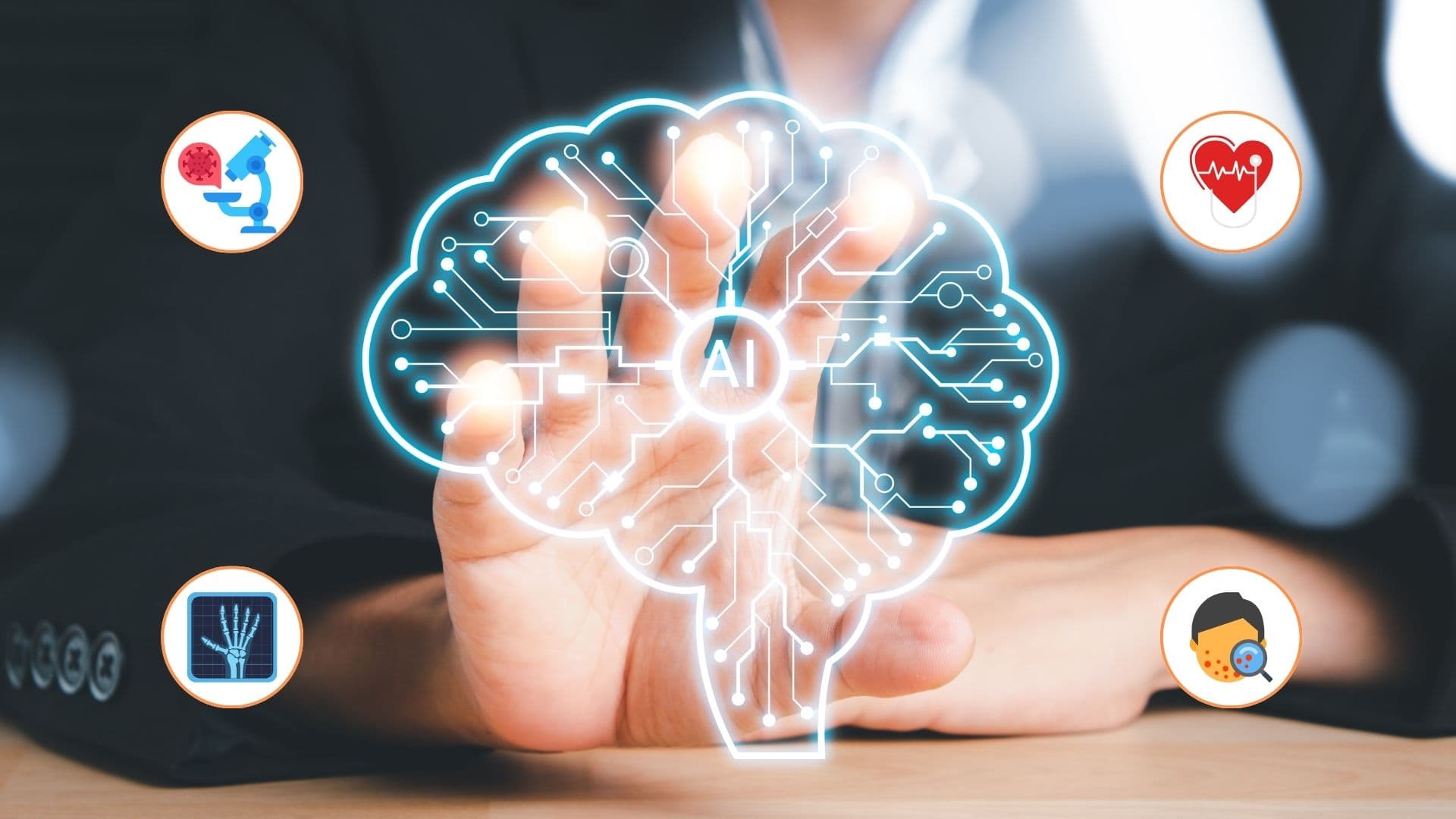
Let's look at how AI assists in medical diagnosis in the fields of radiology, pathology, cardiology, and dermatology.
Radiology
AI is reshaping radiology by leveraging its advanced pattern recognition abilities to rapidly analyze medical images. Studies highlight AI's capability to detect strokes within seconds of imaging, far quicker than traditional methods reliant on busy radiologists. This accelerated diagnosis is crucial for prompt treatment and improved patient outcomes.
AI extends its diagnostic prowess beyond strokes to encompass conditions such as sepsis, pneumonia, pulmonary embolism, and acute kidney injury. Machine learning (ML) advancements enable AI to achieve high precision in identifying fractures, tumors, and vascular irregularities, enhancing diagnostic accuracy.
Moreover, AI assists clinicians in managing the overwhelming volume of medical images by pinpointing critical images and relevant patient histories. This capability streamlines workflow and facilitates more informed medical interventions.
Pathology
Artificial Intelligence (AI) helps identify cancerous cells through innovative technologies. Modern electronic databases store vast amounts of digital records and reference images, especially in pathology, using whole slide images (WSIs). However, the immense gigapixel size of each WSI and the growing number of images in repositories pose challenges for efficient search and retrieval.
Addressing this challenge, researchers at the Mahmood Lab, in collaboration with Brigham and Women's Hospital, developed SISH (self-supervised image search for histology). This AI system autonomously learns feature representations, enabling rapid and consistent retrieval of cases with similar features across pathology databases, irrespective of database size.
In their study, SISH demonstrated remarkable speed and accuracy in retrieving interpretable disease subtype information from a database comprising tens of thousands of WSIs from over 22,000 patient cases. The algorithm successfully handled diverse disease types across multiple anatomical sites, surpassing other methods in speed and efficiency, even as database sizes expanded.
Hence, it won't be wrong to say that AI's integration in pathology accelerates disease diagnosis and subtype identification and streamlines access to critical medical data, revolutionizing how pathologists analyze and interpret complex histological images.
Cardiology
Heart disease prediction and diagnosis are undergoing a major transformation. Artificial Intelligence is significantly enhancing the ability to identify risks and improve accuracy. Traditionally, cardiologists rely on extensive training to identify subtle variations in electrocardiogram (EKG) wave measurements that may indicate heart issues.
However, human error can lead to misdiagnosis in many cases, either due to overlooking critical details or encountering atypical symptoms that do not conform to established diagnostic patterns.
AI addresses these challenges by leveraging its ability to analyze vast datasets and identify complex patterns that may escape human detection. By applying AI algorithms to EKG readings and other diagnostic data, Healthcare providers can achieve more accurate and timely diagnoses. This capability is crucial in emergencies such as ischemic strokes, where rapid and precise diagnosis is essential for initiating life-saving treatments.
In essence, AI's integration into cardiology not only enhances diagnostic capabilities but also supports Healthcare providers in making informed decisions swiftly, potentially improving patient outcomes and reducing the incidence of medical errors.
Dermatology
Dermatologists are leveraging AI to analyze images and improve diagnostic accuracy, particularly in identifying melanoma and other skin cancers. Thanks to the AI-powered advanced image processing technologies.
Studies highlight AI's ability to collaborate effectively with dermatologists, achieving superior results compared to either humans or AI alone. AI models, such as Convolutional Neural Networks (CNNs), are specifically trained to distinguish between cancerous melanoma tissue and non-malignant skin tissue with high precision.
The synergy between human expertise and AI capabilities is increasingly recognized as a potent tool in dermatological diagnosis. Integrating AI feedback with clinical expertise enhances diagnostic outcomes, surpassing the performance of either method individually.
In dermatology, AI not only aids in accurate diagnosis but also supports Healthcare providers in making informed treatment decisions, potentially improving patient outcomes and advancing the field of dermatological care.
Success Stories
The global revenue of artificial intelligence (AI) in the medical diagnostics market was valued at $1.3 billion in 2023 and is projected to reach $3.7 billion by 2028, with a compound annual growth rate (CAGR) of 23.2% during this period. Let's talk about the two major success stories that highlight how AI is revolutionizing medical diagnosis.
Predicting Drug Success for Cancer Patients with AI
Researchers at The Institute of Cancer Research in London, supported by the NIHR, have developed a groundbreaking prototype test using AI to predict effective drug combinations for cancer patients within 24-48 hours. This innovation harnesses AI's ability to analyze extensive data from tumor samples, offering more accurate predictions of patient responses to treatments compared to traditional methods.
The test analyzes the genetic profiles of tumors to identify mutations driving tumor growth, which can be targeted with specific treatments. Beyond genetic analysis, the AI-driven test also examines molecular interactions within tumors to predict how they respond to different drug combinations.
Operating in two stages, the AI first evaluates responses to individual cancer drugs based on genetic markers, then predicts responses to combinations of two drugs. This streamlined process delivers results swiftly, potentially guiding clinicians in selecting the most effective treatments tailored to individual patients.
Reducing COVID-19 Spread in Hospitals with AI
At the University of Oxford, researchers have developed a pioneering AI tool that can swiftly rule out COVID-19 infection within an hour of patients arriving at hospitals. This tool outpaces the 24-hour turnaround time of PCR tests and offers greater reliability than lateral flow tests by leveraging routine patient data collected upon admission.
The AI tool was trained using data from 115,000 patients, incorporating measurements like body temperature, blood pressure, heart rate, and initial blood tests, along with PCR test results. It accurately determines COVID-19 status, demonstrating a high level of agreement with PCR tests in emergency department settings and hospital admissions.
In real-world testing across two hospitals, the AI achieved a remarkable 98% accuracy in ruling out COVID-19 infections. This capability not only enhances infection control measures within hospitals but also expedites treatment for non-infected individuals, potentially reducing virus transmission and improving patient care outcomes.
Want to Integrate AI Into Your Healthcare Startup?
Bitsol is a reliable technology partner that enables Startups with cutting-edge technology to transform their vision into practical solutions. Our expertise lies in developing customized software solutions and product design services for Healthcare Startups. This allows them to transform, scale, and achieve exponential business growth.
Discover how Bitsol can guide your decision-making process and maximize your strategic outcomes! To top it off, we're excited to offer your startup a FREE AI Proof of Concept (PoC) to kickstart your journey!
So, what are you waiting for?