A Proof of Concept (PoC) is developed early in the product lifecycle, often before securing investment, forming a full team, or establishing a formal business plan. Its primary purpose is to validate the feasibility of a project.
This crucial stage helps justify the subsequent investment in design and development, ensuring that resources are allocated to projects with proven potential. By confirming the viability of your ideas, a PoC can save significant time and money, guiding your project toward successful implementation.
In this article, we'll explore the steps involved in developing an effective Proof of Concept.
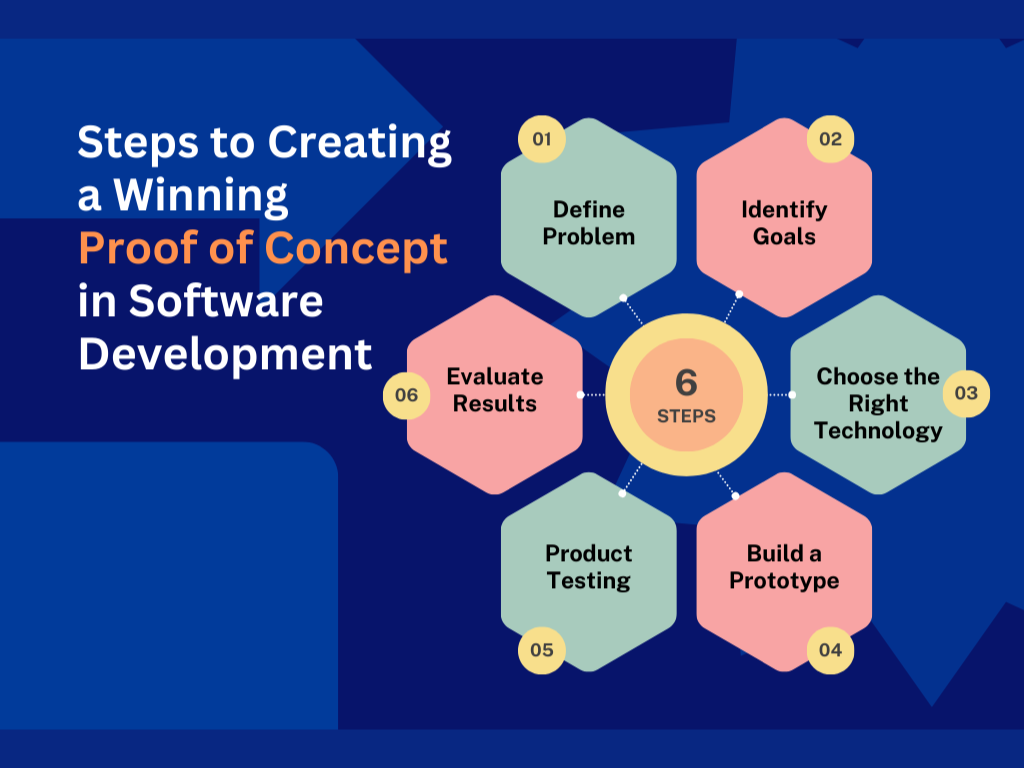
Step 1: Define the Problem and Set Goals

Before diving into a comprehensive plan for your Proof of Concept (PoC), it's essential to clearly define your goals. Establishing these objectives early on ensures that your efforts are focused and that your PoC delivers valuable insights. Here are some common goals for a PoC:
- Gauge market demand for your concept
- Validate whether a software idea is worth pursuing
- Determine market interest in a novel idea
- Gather feedback from potential users or target audience
- Test a new business model or strategy
Consider which of these outcomes aligns with your team's needs. A PoC might address a single goal or several, depending on the project's scope, available resources, and complexity. Some projects may achieve their goals in stages. For instance, an initial PoC might validate the project's basic feasibility, while subsequent prototypes could address technical risks and collect customer feedback.
Step 2: Choose the Right PoC Approach
Once you've established the goals for your Proof of Concept (PoC), the next step is to decide on the general approach you'll take. The nature of your goals will significantly influence this decision.
If your goal is to prove the feasibility of a new type of product or service, you might build a basic prototype that showcases its core functionality. This helps stakeholders understand how it works at a fundamental level.
Conversely, if your goal is to validate the implementation of a specific technology, focus on demonstrating that the technology can be integrated and operate effectively. In this scenario, the prototype's appearance is secondary to its functional performance.
Step 3: Select the Right Technologies and Platforms
Selecting the appropriate technologies or platforms for your Proof of Concept (PoC) is crucial to its success. Here are a few key considerations to guide your decision:
- Budget Constraints: Evaluate your budget for the PoC. Determine how much you can invest in this phase and whether this PoC will be a stepping stone to a more advanced version. Opt for cost-effective solutions that allow you to build quickly and effectively, keeping in mind that the PoC doesn't need to be reusable like a full prototype.
- Purpose and Goals: Reflect on the goals you set in the earlier steps. What do you aim to achieve with your PoC? Whether you're testing a new product concept or validating a specific technology, your choice of tools should align with these objectives.
- Audience Needs: Consider who will interact with your PoC. Are they end-users, stakeholders, or technical evaluators? Understanding their needs and expectations will help you choose technologies that enhance the user experience and meet their requirements.
Keep your PoC simple and focused. Choose a technology stack that is straightforward and allows rapid development, ensuring that you can demonstrate the core concept without unnecessary complexity.
Step 4: Form Your Development Team and Create a Prototype

Choosing the right development team is pivotal to the success of your Proof of Concept (PoC). Opt for a dedicated team that sees you as a partner. This ensures a level playing field and fosters a collaborative environment where teamwork and shared vision thrive.
A good cultural fit is essential. It encourages open communication, mutual understanding, and a commitment to your project's success. The right team will deeply understand your business needs and provide ongoing support and enhancements, ensuring accountability throughout the process.
Throughout the development stages, your team should actively engage with you, asking detailed questions to ensure they fully grasp your requirements. This proactive approach reduces the risk of misunderstandings, keeps costs in check, and maintains high product quality.
Step 5: Product Testing
Once your Proof of Concept (PoC) prototype is built, it's time to put it to the test. This stage is crucial for validating your initial assumptions and ensuring the prototype meets the goals you've set.
- Start with Basic Functionality: Focus on the core features of your prototype. Ensure that the primary functionalities work as expected. This helps in identifying any immediate technical issues that need to be addressed.
- Gather User Feedback: Engage a small group of target users or stakeholders to interact with your prototype. Their feedback will provide valuable insights into the user experience, highlighting what works well and what needs improvement.
- Iterate and Improve: Based on the feedback and test results, make necessary adjustments to your prototype. This iterative process helps refine the product and align it more closely with user needs and expectations.
- Document Findings: Keep a detailed record of all the feedback, test results, and subsequent changes. This documentation will be instrumental in making informed decisions for future development stages.
Effective testing not only validates your PoC but also sets the foundation for a robust and user-centric final product.
Step 6: Evaluate Results and Assess the Feasibility of the Software Product
Evaluating the results of your Proof of Concept (PoC) is a critical step in determining whether your project is worth pursuing further. This stage involves a thorough analysis to validate the feasibility of the software product.
- Validate Business Outcomes: Assess whether the PoC meets the desired business goals. Determine if the software can achieve the intended impact and support the overall business objectives.
- Cost Analysis: Evaluate the financial feasibility by analyzing the costs associated with the project. Ensure that the project is affordable and provides a good return on investment.
- Timeline Assessment: Review the project timeline to ensure that the software can be delivered within the expected timeframe. This helps in planning and managing the project's development phase effectively.
- Resource Evaluation: Identify the human, technical, and other resources required for the project. Confirm that these resources are available and sufficient to support the project's needs.
- Risk Assessment: Analyze the potential risks involved in the project. Develop strategies to mitigate these risks and ensure that they do not hinder the project's progress.
Based on this evaluation, decide whether to proceed with the project or halt further development. If the PoC proves successful, start planning for the full software development process. If not, use the insights gained to avoid investing further in an unfeasible project.
A Proof of Concept (PoC) is a vital tool in determining the feasibility of a software project. A successful PoC can significantly mitigate project risks down the line.
A well-executed PoC enables teams to evaluate a project's feasibility, estimate budgets accurately, validate market needs, and understand the performance limitations of the proposed software.
How Bitsol Can Help You Transform Your Idea into a Product?
Bitsol, a reliable Technology Partner, enables Startups with cutting-edge technology to transform their vision into practical solutions. Our expertise lies in developing customized software solutions and product design services for Startups. This allows them to transform, scale, and achieve exponential business growth.
Discover how Bitsol can guide your decision-making process and maximize your strategic outcomes!